
coming
soon
coming
soon
coming
soon
Identification and Appearance
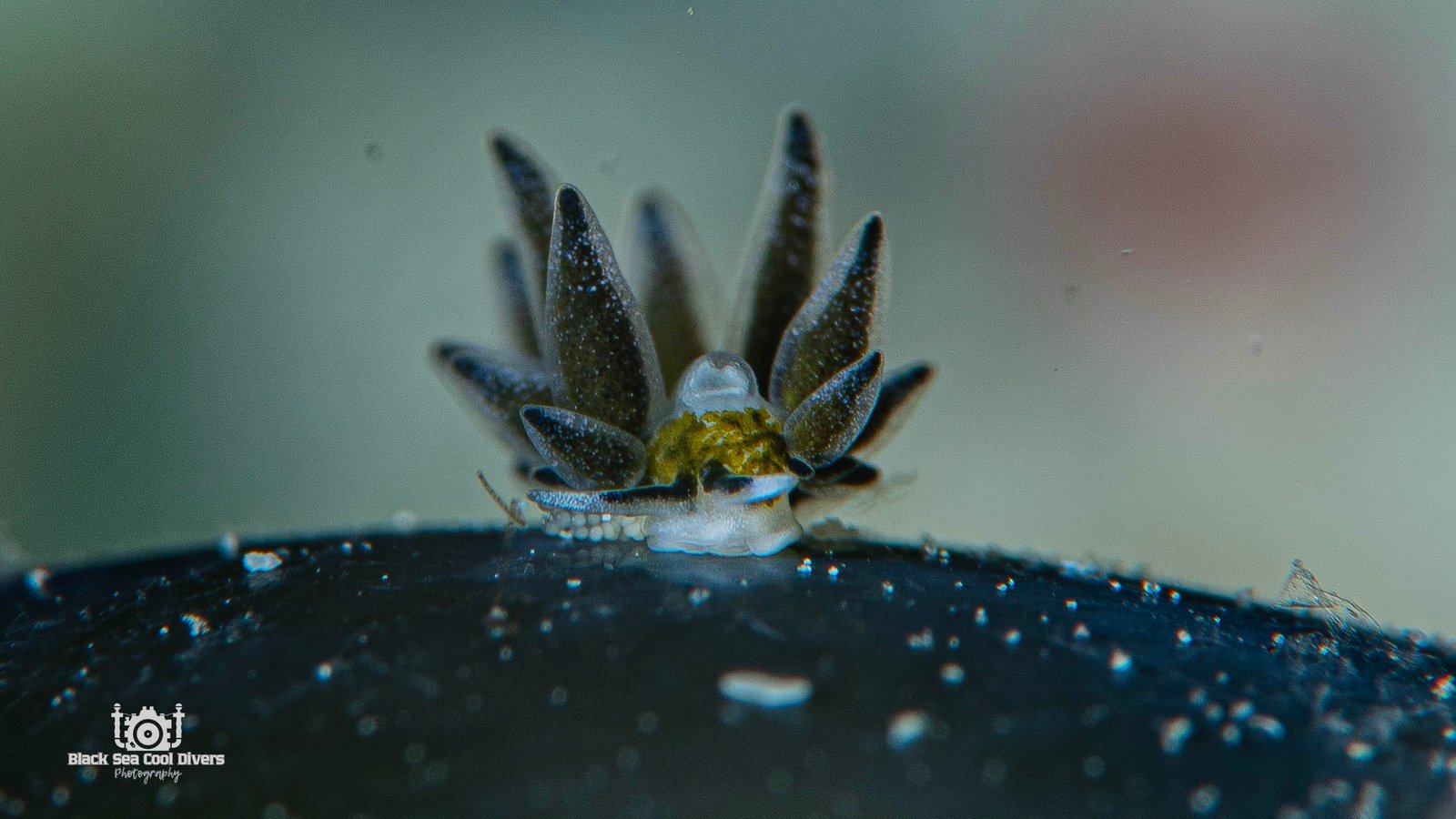
This specimen carries the label Ercolania sp. — a confirmed genus, but no confirmed species name yet. The genus Ercolania belongs to the family Limapontiidae and the order Sacoglossa. These small sea slugs feed on algal cell contents and retain functional chloroplasts. This individual shows the classic features of the genus: dark brown to black cerata with iridescent white spots, a white translucent head, and a vivid yellow-green digestive gland glowing through the body wall.
Adults reach around 5–10 mm in length. The cerata are elongated and fusiform, arranged in rows along both sides of the body. The rhinophores are smooth, rolled, and white. In particular, the yellow-green digestive gland stands out clearly and gives the best clue for field identification. The white spots on the dark cerata form a distinctive pattern that appears iridescent under torch or strobe light.
Identification note: Species-level identification in Ercolania requires microscopic examination of the radula and reproductive organs. Many species in this genus look very similar externally. The Indo-Pacific holds numerous undescribed forms. As a result, this specimen stays at genus level, supported by photographic evidence from Alad Island, Romblon, Philippines.
Behaviour and Biology
Ercolania species feed on filamentous green algae — typically Cladophora, Chaetomorpha, or Boodlea. They pierce algal cells with a specialised radula and extract the contents directly. In addition, they retain functional chloroplasts from their food through kleptoplasty. These stored chloroplasts give the digestive gland its green colour and provide extra energy through photosynthesis.
This species is diurnal and lives in small groups on or within algal mats. Its tiny size and dark colour make it nearly invisible against dark filamentous algae. Therefore, divers overlook it regularly despite it being potentially quite common in suitable habitats. The animal moves slowly and relies on crypsis rather than speed or chemical defence.
Distribution and Diving in Romblon
The genus Ercolania spans the Indo-Pacific, with records from Japan, Australia, the Philippines, and Indonesia. In Romblon, this specimen turned up on filamentous green algae in the shallow reef zone at Alad Island. It occurs from 1 to roughly 20 metres wherever algal mats grow on reef flats, rubble, and reef edges.
At Sunset Cove Romblon, spotting an Ercolania sp. is a rare and rewarding macro find. First, search filamentous green algae at 1–15m. Next, look carefully for the dark cerata with iridescent white spots — the yellow digestive gland glowing through the body is the key clue. A diopter or 5:1 magnification is essential. Steady technique matters too, since any movement at this scale ruins focus. For taxonomy see iNaturalist genus Ercolania. Browse more species in our Marine Life Encyclopedia.
| Order | Sacoglossans (Sacoglossa) |
|---|---|
| Family | Limapontiidae |
| Genus | Ercolania |
| iNaturalist | 133659 |
| Size | 3–10 mm |
|---|---|
| Colour Variations | Dark brown to black elongated cerata with white iridescent spots; yellow-green digestive gland visible through translucent white body; rhinophores white and smooth; head white |
| Identifying Features | Dark/black cerata with iridescent white spotting; yellow-green digestive gland clearly visible; very small size 3–10mm; found on filamentous green algae; white translucent head and body |
| Depth Range | 1–20 m (most common: 5 m) |
|---|---|
| Temperature | 24–30°C |
| Primary Prey / Host | Filamentous green algae (Cladophora, Chaetomorpha, Boodlea) |
| Seasonal Presence | Year-round |
|---|---|
| Egg Ribbon | Small white coiled ribbon deposited on host algae |
| Spawning Season | Unknown |
| Chemical Defence | Absent |
| Aposematic Colouring | Absent |
| Camouflage Strategy | Dark cerata blend with dark filamentous algae; very small size reduces detectability |
| Escape Response | Relies on small size and crypsis; moves slowly through algal mat |