
coming
soon
coming
soon
coming
soon
coming
soon
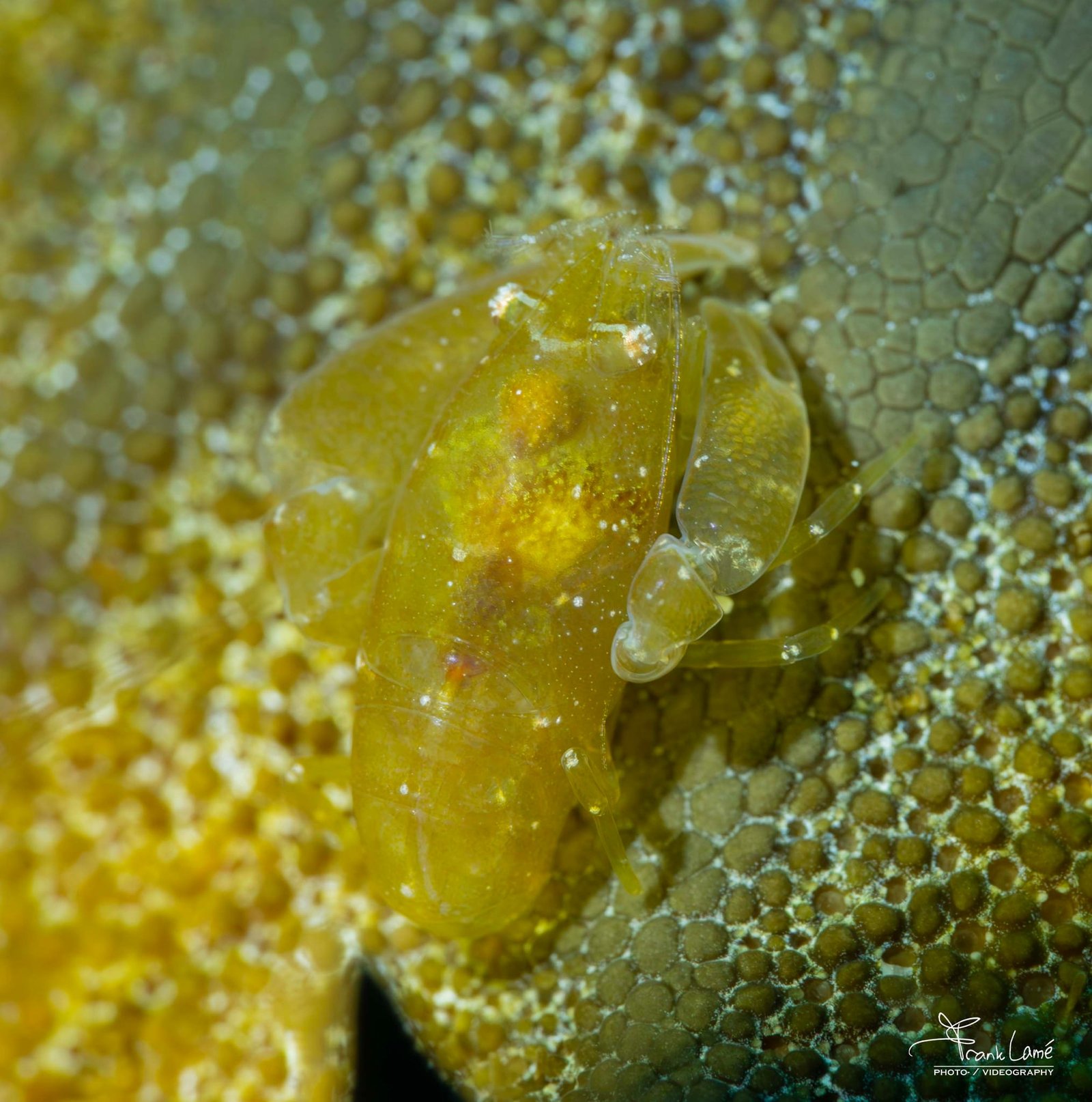
Odontonia katoi is a tiny, host-specific shrimp that lives exclusively inside the body cavity of tunicates — the barrel-shaped colonial filter feeders found across Indo-Pacific reefs. Fransen described it in 2006 from specimens collected in the Philippines. It belongs to the genus Odontonia, a group of obligate tunicate-associated shrimps within the family Palaemonidae. Finding this species in Romblon therefore requires two things: a sharp eye and the knowledge to look inside tunicates. Our guides actively search for it on every dedicated macro dive. A sighting at our macro photography dive sites in Romblon is consequently a rewarding find for any underwater photographer.
Appearance and Identification
Odontonia katoi is a small, semi-transparent shrimp typically measuring under 10mm. The body is slender and largely colourless, with the internal organs visible through the translucent cuticle. Red-orange chromatophores mark the carapace and abdomen, giving the animal a spotted appearance. The rostrum is moderately long and armed with dorsal and ventral teeth — a key feature of the genus Odontonia. Furthermore, the chelipeds (claws) are relatively well-developed for a shrimp of this size. In addition, the animal is almost always found in pairs — a male and female living together inside the same tunicate host. This pairing behaviour makes identification easier once the tunicate is examined carefully.
Habitat and Host Association
Odontonia katoi lives exclusively inside compound tunicates of the family Polyclinidae. It does not leave its host freely — the tunicate provides shelter, food particles, and a protected environment for reproduction. The shrimp feeds on mucus and detritus produced by its host. Moreover, each tunicate colony typically houses one breeding pair, suggesting a degree of territorial behaviour. Researchers have recorded the species from the Philippines, Indonesia, and the broader Western Pacific. Romblon therefore sits squarely within its known range.
Diving with Odontonia katoi in Romblon
To find this species, look carefully inside compound tunicates on silty rubble and reef slopes — especially colonial tunicates with wide atrial openings. A torch and patience are essential. Because the shrimp is small and semi-transparent, it blends closely with the tunicate tissue. Consequently, macro lenses and a steady hand produce the best results. Submit your sighting to the iNaturalist taxon page to contribute to distribution mapping. Full taxonomy is available on the WoRMS species page.
| Order | Decapoda |
|---|---|
| Suborder | Pleocyemata |
| Family | Palaemonidae |
| Genus | Odontonia |
| WoRMS AphiaID | 468163 |
| iNaturalist | 1468359 |
| Identifying Features | Semi-transparent body under 10mm. Red-orange chromatophore spots on carapace and abdomen. Moderately long rostrum with dorsal and ventral teeth. Well-developed chelipeds. Almost always found in male-female pairs inside same tunicate host. |
|---|
| Substrate | Inside compound tunicates (Polyclinidae), silty rubble, reef slopes |
|---|