
coming
soon
coming
soon
coming
soon
Chromodoris kalawakan is one of the most recently described nudibranchs in the Indo-Pacific. Gosliner, Valdés and colleagues described it in 2022, making it a genuinely new addition to science. The species name kalawakan comes from the Filipino word for “galaxy” or “outer space” — a direct reference to its striking dark blue body covered with white spots, resembling a star field. Finding this nudibranch in Romblon is therefore both a rare and a scientifically exciting event. It belongs to a group of Chromodoris nudibranchs with similarly patterned colouration, yet its specific combination of features is unique. Every documented sighting helps researchers map its distribution across the macro dive sites of the Philippines.
Appearance and Identification
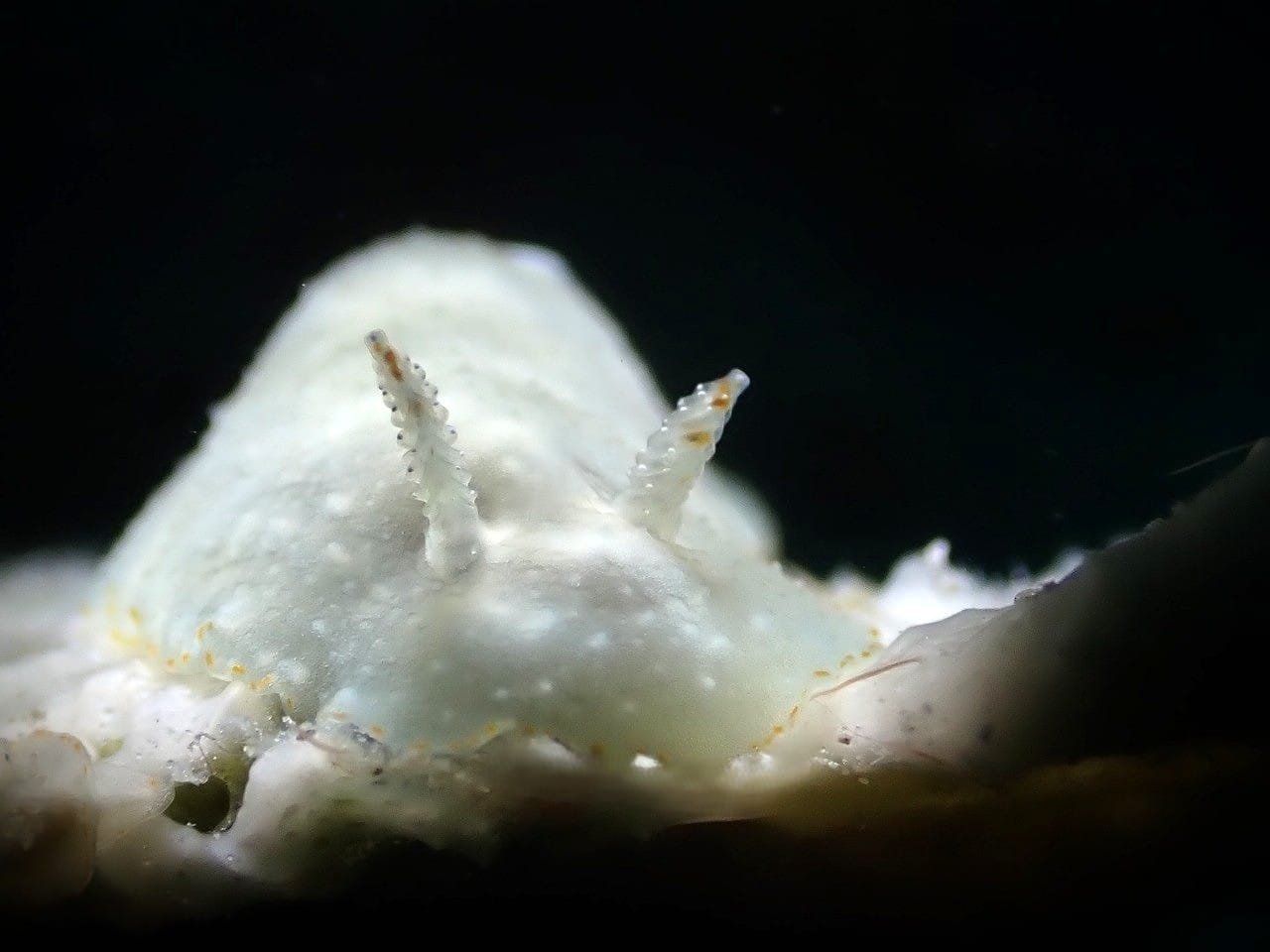
Chromodoris kalawakan has a dark blue to blue-black body covered with numerous small white spots — the pattern that earned it the name “Galaxy.” The mantle edge shows a pale blue or white border. The gills and rhinophores are orange to reddish-orange, providing a vivid contrast against the dark body. Furthermore, the underside of the mantle is typically pale. In terms of size, it reaches approximately 20–35mm in length as an adult. The combination of dark blue body, white spots, orange gills, and orange rhinophores makes it distinctive among Philippine Chromodoris species. However, careful attention to gill colour and mantle border is necessary to separate it from similar species such as Chromodoris annae and Chromodoris dianae.
Habitat and Biology
Chromodoris kalawakan feeds on sponges of the order Verongimorpha — the same dietary group targeted by many other Chromodoris nudibranchs. It lives on reef slopes and silty substrates at recreational diving depths. As a result, it falls well within the range accessible on our guided macro dives around Alad Island. Like all chromodorids, it is a simultaneous hermaphrodite — every individual is both male and female and can exchange sperm with any other adult of the species. Moreover, it deposits eggs in a characteristic spiral egg mass on the reef surface. Because it was described only in 2022, very little published data exists on its behaviour, population size, or host sponge preferences in the Philippines.
Diving with Chromodoris kalawakan in Romblon
Look for this species on silty rubble and reef slopes where encrusting sponges are present — typically at 10–25 metres. Its dark blue colouration stands out against pale substrate, though it can be surprisingly easy to miss against dark encrusting sponge. Consequently, a slow, methodical search pattern produces the best results. Photographing Chromodoris kalawakan and submitting your sighting to the iNaturalist taxon page contributes directly to science. Full taxonomy is available on the WoRMS species page. Visit our Romblon Critter Encyclopedia to explore more species found at our dive sites.
| Suborder | Doridina (Dorid Nudibranchs) |
|---|---|
| Family | Chromodorididae |
| Genus | Chromodoris |
| WoRMS AphiaID | 1450726 |
| iNaturalist | 1115871 |
| Identifying Features | Dark blue to blue-black body with numerous small white spots. Pale blue or white mantle border. Orange to reddish-orange gills and rhinophores. 20–35mm adult length. Distinguish from C. annae and C. dianae by gill colour and mantle border detail. |
|---|