
coming
soon
coming
soon
coming
soon
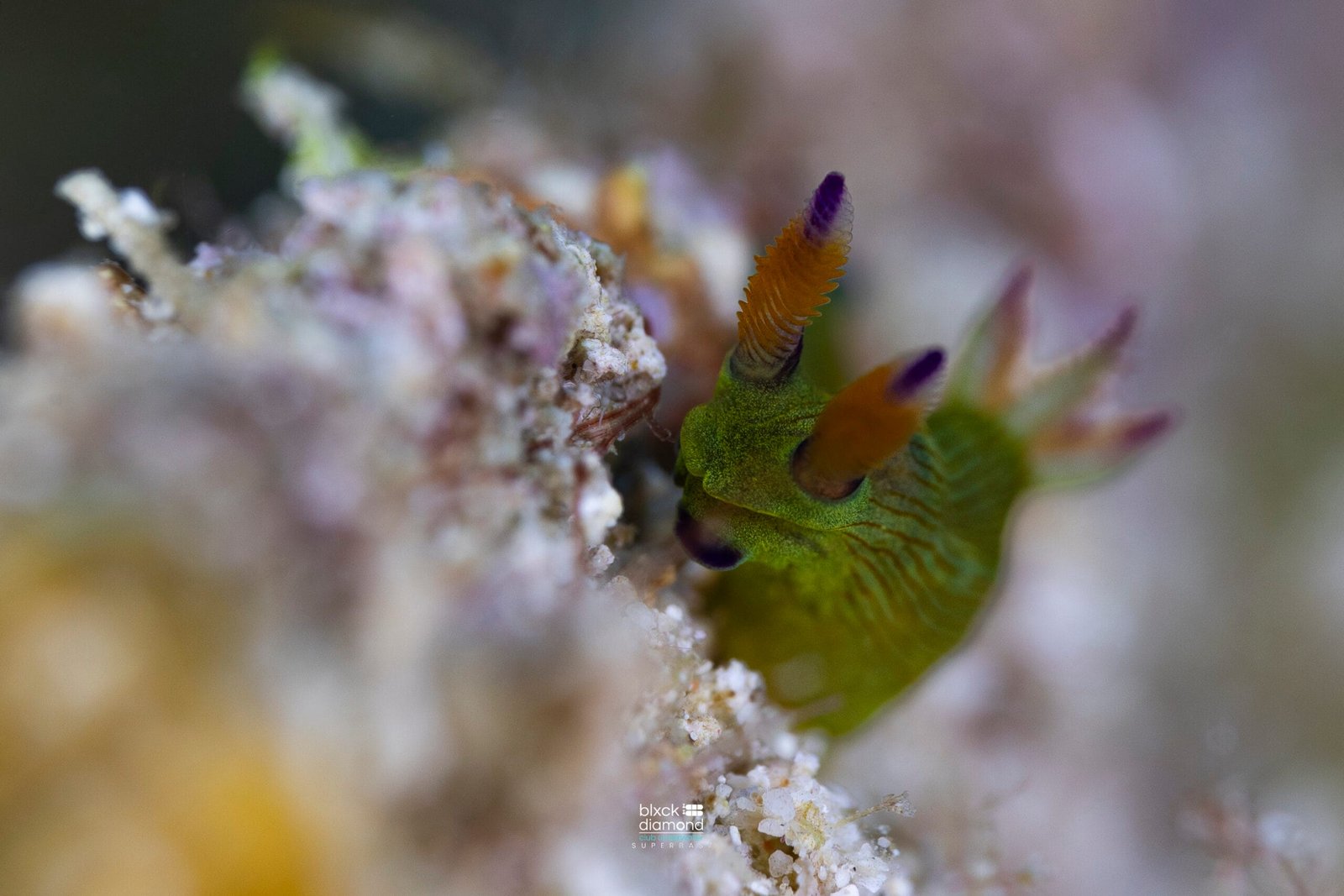
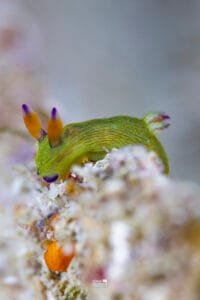
Tambja kava is one of the rarest nudibranchs in the tropical Indo-Pacific. Scientists first described this species in 2014, making it a remarkably recent addition to the scientific record. Pola, Padula, Gosliner, and Cervera formally named it in their landmark paper on the subfamily Nembrothinae published in Cladistics. Divers who encounter Tambja kava in the waters of Romblon, Philippines are witnessing something truly exceptional — a species so rarely recorded that each observation carries genuine scientific value.
Appearance and Identification
Tambja kava belongs to the family Polyceridae, subfamily Nembrothinae — a group of nudibranchs famous for their bold colours and elongated bodies. Like its close relatives, Tambja kava displays a vivid body pattern that makes it unmistakable when found. The genus Tambja feeds exclusively on bryozoans, so divers should look for it crawling slowly across bryozoan colonies on reef walls and rubble slopes. Its gills and rhinophores are prominent and contribute to its striking visual profile. For identification references, visit the WoRMS species page for Tambja kava.
Biology and Behaviour
All members of the genus Tambja are specialist predators. They target specific bryozoan species and rarely stray far from their prey. Furthermore, Tambja species sequester chemical compounds from their bryozoan diet and use them for chemical defence. This makes them toxic and unpalatable to most predators. As a result, they have little need for camouflage and instead advertise their toxicity through bright aposematic colouration. Tambja kava is hermaphroditic, carrying both male and female organs simultaneously — a common reproductive strategy in nudibranchs that increases the chance of successful mating.
Diving with Tambja kava in Romblon
Finding Tambja kava on a dive is an exceptional event. Our SDI/TDI trained guides at Sunset Cove actively search for rare Polyceridae species at our macro photography dive sites around Alad Island. The species occurs at depths accessible to recreational divers — typically between 5 and 30 metres on bryozoan-encrusted reef walls. Documenting Tambja kava with underwater photography directly contributes to science. Each photograph with location data helps researchers map the distribution of this newly described species across the Indo-Pacific. Browse more rare species in our Marine Life Encyclopedia.
| Suborder | Doridina (Dorid Nudibranchs) |
|---|---|
| Family | Polyceridae |
| Subfamily | Nembrothinae |
| Genus | Tambja |
| WoRMS AphiaID | 816920 |
| iNaturalist | 628404 |
| Identifying Features | Bold coloured body typical of Nembrothinae subfamily. Prominent gills and rhinophores. Feeds exclusively on bryozoans. |
|---|