
coming
soon
coming
soon
coming
soon
coming
soon
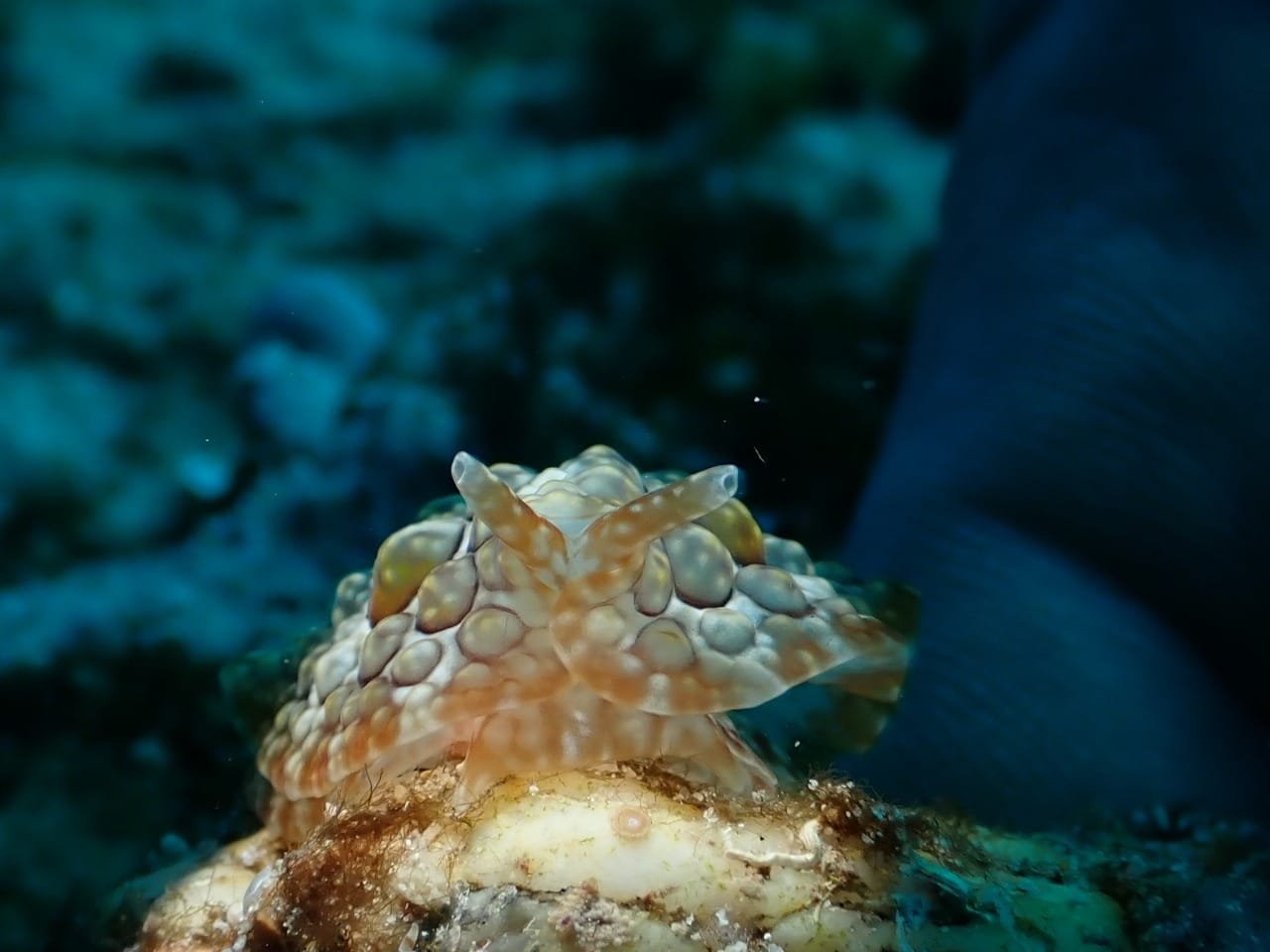
Pleurobranchus forskalii is one of the largest and most distinctive pleurobranchs in the Indo-Pacific. Rüppell and Leuckart described it in 1828, making it one of the earliest described sea slugs from the Red Sea and Indo-Pacific. It belongs to the order Pleurobranchida — the side-gilled slugs — a group distinct from nudibranchs, though often encountered alongside them on the same macro dive. Finding it in Romblon is a rewarding experience. Its large size and bold colouration make it one of the more visually striking invertebrates at our macro photography dive sites in Romblon.
Appearance and Identification
Pleurobranchus forskalii is a large, flattened sea slug reaching up to 120mm in length. The body is firm and muscular. The dorsal surface is typically dark brown to purplish-black, covered with small rounded tubercles that give it a textured, bumpy appearance. The mantle edge is often paler — cream, white, or yellow. Furthermore, the underside is pale and the large plume-like gill is tucked beneath the right side of the mantle — a key feature distinguishing pleurobranchs from nudibranchs, which carry their gills on the back. In addition, the rhinophores are relatively short and rolled. The bold dark colouration is a warning signal — this animal produces sulphuric acid as a defence mechanism and is highly toxic to predators.
Habitat and Biology
Pleurobranchus forskalii is a nocturnal predator. During the day it rests hidden under rubble, in crevices, or on silty substrate. At night it actively hunts colonial tunicates and compound ascidians — its primary prey. It produces sulphuric acid from specialised glands, making it distasteful or toxic to most predators. Moreover, it is a simultaneous hermaphrodite and deposits large egg masses on the reef. Researchers have recorded it widely across the Indo-Pacific — from the Red Sea through to the Philippines, Indonesia, and the Pacific. Consequently, Romblon sits well within its range.
Diving with Pleurobranchus forskalii in Romblon
Look for Pleurobranchus forskalii on silty rubble and under rubble at 5–25 metres — particularly on night dives when it is actively hunting. Its large size and dark bumpy surface make it relatively easy to identify once spotted. Therefore, it is an accessible species for macro photographers of all levels. Because it moves slowly and is large enough to fill a frame at moderate magnification, it is an excellent subject for wide-angle macro shots as well as close-up detail work. Submit your sighting to the iNaturalist taxon page. Full taxonomy is on the WoRMS species page.
| Order | Pleurobranchida |
|---|---|
| Family | Pleurobranchidae |
| Genus | Pleurobranchus |
| WoRMS AphiaID | 140819 |
| iNaturalist | 49904 |
| Size | 60–120 mm |
|---|---|
| Identifying Features | Large up to 120mm. Dark brown to purplish-black dorsal surface with rounded tubercles. Pale mantle edge. Gill tucked under right side of mantle — key distinction from nudibranchs. Short rolled rhinophores. Produces sulphuric acid defence. |
| Substrate | Silty rubble, under rubble, reef crevices |
|---|---|
| Reef Zone | Rubble slope, silty reef |
| Depth Range | 5–25 m |
| Primary Prey / Host | Colonial tunicates, compound ascidians |
| Active Time | Nocturnal |
|---|---|
| Seasonal Presence | Year-round |
| Egg Ribbon | Large spiral egg mass, cream to white |
| Spawning Season | Not yet documented |
| Chemical Defence | Present |
| Aposematic Colouring | Present |