
coming
soon
The Nephtheid Specialist
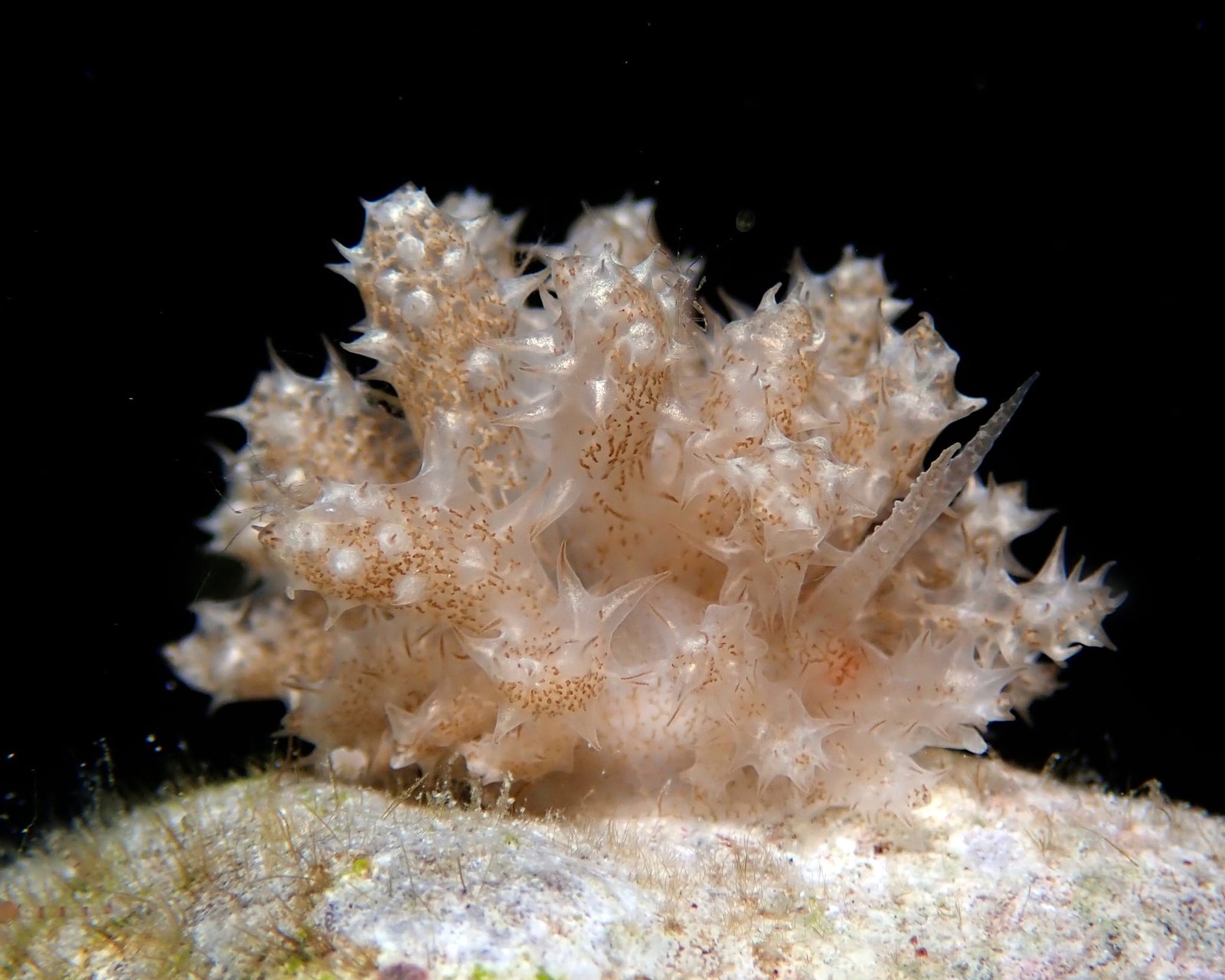
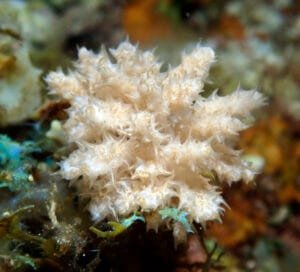
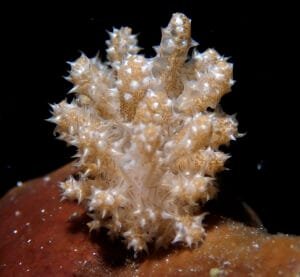
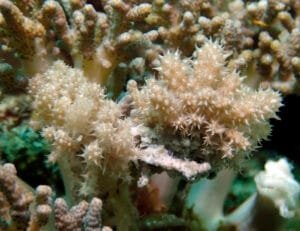
Phyllodesmium koehleri (Burghardt, Schrödl & Wägele, 2008) stands apart from every other solar-powered nudibranch at our macro dive sites in Romblon, Philippines. While its relatives feed on Xenia or Sarcophyton coral, this species feeds exclusively on Nephtheidae soft corals — primarily Paralemnalia and Lemnalia. Furthermore, its spoon-like spiny cerata are completely unique within the genus. No other Phyllodesmium species has this ceratal shape. It belongs to the order Nudibranchia, suborder Aeolidina, family Myrrhinidae. It was previously known to divers as Phyllodesmium sp. 2 before its formal description in 2008. Find it on iNaturalist.
Solar Powered on a Different Coral
Like all Phyllodesmium species, Phyllodesmium koehleri retains zooxanthellae from its coral prey and derives energy from photosynthesis. However, its zooxanthellae are stored in branches of the digestive gland within the body wall — not in terminal ceratal structures. This arrangement is typical of non-Xeniidae feeding species in the genus. Its close relatives Phyllodesmium jakobsenae, Phyllodesmium longicirrum and Phyllodesmium colemani are also documented in our Marine Life Encyclopedia. Together these four species represent an extraordinary diversity of solar-powered nudibranch strategies found at Romblon.
Finding It at Sunset Cove
At Sunset Cove Beach & Dive Resort, our guides search fluffy Nephtheidae soft coral colonies — the finger-like Paralemnalia and Lemnalia typically found on rubble slopes. Therefore, knowing your soft corals is the key to finding this species. The spiny spoon-shaped cerata make it distinctive once spotted. For underwater macro photographers in Romblon, photographing this species alongside the other three Phyllodesmium at our sites creates a compelling story of solar-powered camouflage diversity. Consequently, finding all four is one of the great macro photography challenges at Sunset Cove.
| Order | Nudibranchs (Nudibranchia) |
|---|---|
| Suborder | Aeolidina (Aeolid Nudibranchs) |
| Family | Myrrhinidae |
| Subfamily | Phyllodesmiinae |
| Genus | Phyllodesmium |
| WoRMS AphiaID | 456998 |
| iNaturalist | 504309 |
| Size | 8–23 mm |
|---|---|
| Colour Variations | Body translucent white. Cerata creamy white with brown digestive gland branch visible on right side. Spoon-like spiny cerata unique within genus — never curled at top unlike Xenia-feeding species. Zooxanthellae stored in branches of digestive gland within body wall. Previously known as Phyllodesmium sp. 2. |
| Identifying Features | Uniquely spoon-like spiny cerata — unlike any other Phyllodesmium. Cerata never curled at tip. Always found on Nephtheidae soft corals (Paralemnalia or Lemnalia). Brown digestive gland branch visible on right side of body. Type locality is the Philippines. Previously called Phyllodesmium sp. 2 by divers. |
| Substrate | coral, rubble |
|---|---|
| Depth Range | 3–25 m (most common: 10 m) |
| Temperature | 24–29°C |
| Primary Prey / Host | Paralemnalia / Lemnalia spp. (Nephtheidae soft coral) |
| Active Time | day, night |
|---|---|
| Seasonal Presence | Year-round — dependent on presence of Nephtheidae soft coral colonies |
| Egg Ribbon | White, coiled ribbon |
| Spawning Season | Not yet documented at SSC |
| Chemical Defence | Present |
| Aposematic Colouring | Absent |
| Camouflage Strategy | Spoon-like spiny cerata mimic the polyp structure of Paralemnalia and Lemnalia soft corals — effective camouflage on prey colonies. |
| Escape Response | Relies on camouflage on Nephtheidae coral. Remains motionless. Chemical defence from coral prey. |