coming
soon
coming
soon
coming
soon
coming
soon
Identification and Appearance
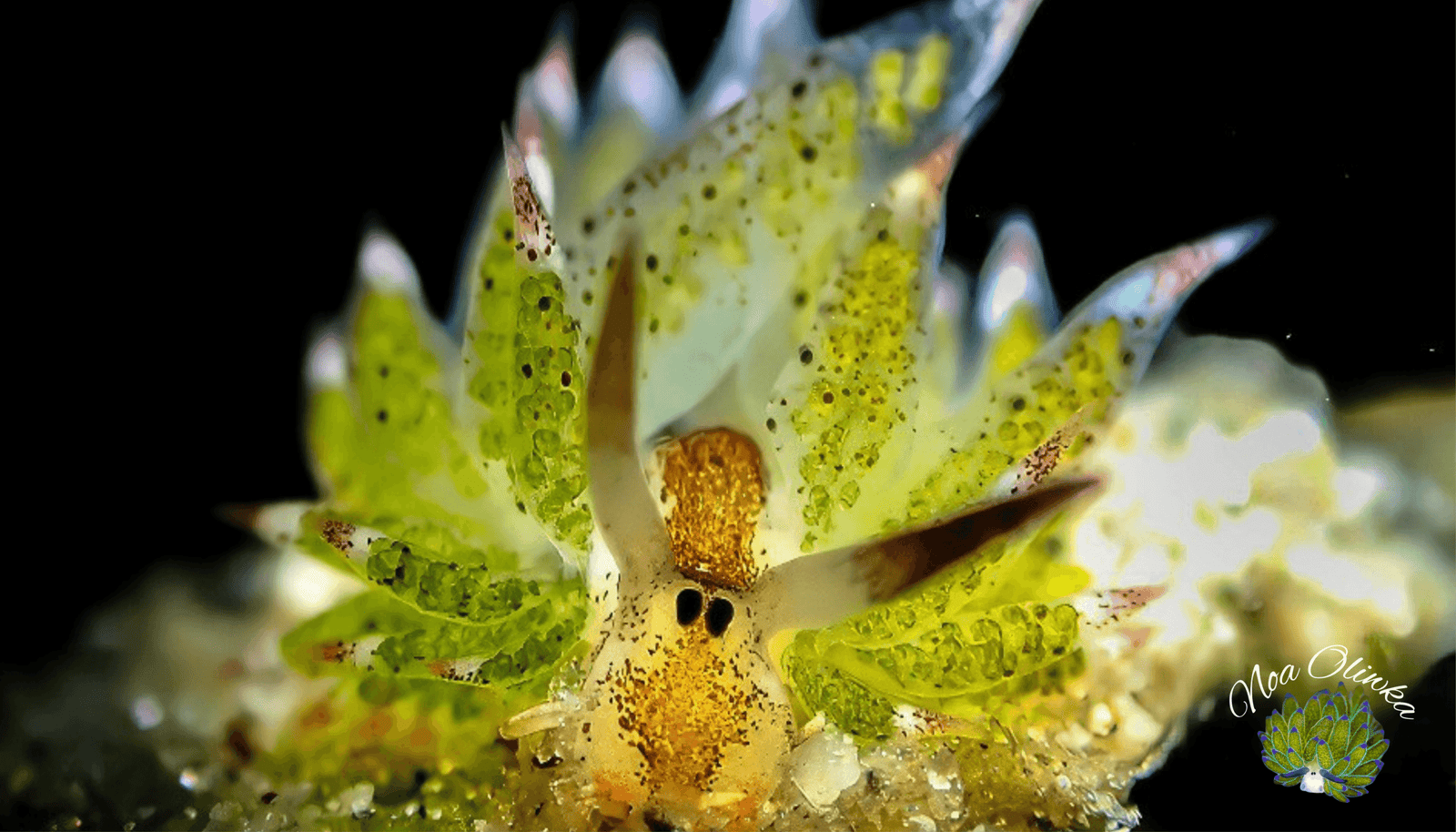
Costasiella kuroshimae is one of the most instantly recognisable sea slugs in the world — and one of the most photographed. Known widely as the little leaf sheep or sea sheep, it earns its name from two large, dark eyes set on a white head, and club-shaped rhinophores that look remarkably like sheep ears. The rows of leaf-shaped cerata running down the body, tipped green by retained chloroplasts, complete the illusion of a tiny, grazing animal.
Adults reach just 5–10 mm in length, making them one of the smaller sacoglossans. The body is translucent white. The cerata colouration varies with diet — the more Avrainvillea algae consumed, the richer the green. The two dark eyes are always the most reliable identification feature. They are visible even to the naked eye and make this species unmistakable among underwater photographers and videographers.
Behaviour and Biology
Costasiella kuroshimae feeds exclusively on Avrainvillea green algae. It pierces individual algal cells and sucks out the contents, retaining the chloroplasts through a process called kleptoplasty. These sequestered chloroplasts remain functional inside the cerata cells, allowing the slug to supplement its energy through photosynthesis. Even when food is unavailable, the stored chloroplasts act as a nutrient reserve, enabling the animal to survive for extended periods without feeding.
The species is diurnal and moves slowly across its host algae. It rarely leaves the Avrainvillea patch where it lives and feeds. When threatened it relies entirely on its cryptic colouration. Under extreme stress it may autotomise — dropping cerata as a distraction to predators, a defensive behaviour shared with other opisthobranch sea slugs.
Distribution and Diving in Romblon
Costasiella kuroshimae is distributed across the tropical Indo-Pacific. It was first described in 1993 from Kuroshima in the Ryukyu Islands of Japan. Since then it has been recorded from the Philippines, Indonesia, and surrounding regions. It inhabits shallow reefs from 1 to 20 metres wherever Avrainvillea algae grows on sandy or rubble substrate.
At Sunset Cove Romblon, finding a little leaf sheep is a highlight of any macro dive. Its tiny size demands patience and careful inspection of Avrainvillea patches. The two dark eyes are the key — scan slowly and look for the characteristic sheep face. A straight-on shot capturing the eyes and rhinophores is the shot every underwater photographer and videographer wants. Use a tight macro lens or a diopter, keep buoyancy steady, and take your time. For taxonomy see WoRMS AphiaID 494655 and iNaturalist taxon 469221. Browse more species in our Marine Life Encyclopedia.
| Order | Sacoglossans (Sacoglossa) |
|---|---|
| Family | Costasiellidae |
| Genus | Costasiella |
| WoRMS AphiaID | 494655 |
| iNaturalist | 469221 |
| Size | 5–10 mm |
|---|---|
| Colour Variations | Translucent white body with green-tipped cerata (chloroplasts visible); eyes are two distinct dark dots; rhinophores club-shaped resembling sheep ears; cerata colouration varies with diet |
| Identifying Features | Two prominent dark eyes on white head; club-shaped rhinophores like sheep ears; rows of leaf-shaped green-tipped cerata; tiny size 5–10mm; found exclusively on Avrainvillea algae |
| Depth Range | 1–20 m (most common: 5 m) |
|---|---|
| Temperature | 24–30°C |
| Primary Prey / Host | Avrainvillea green algae |
| Seasonal Presence | Year-round |
|---|---|
| Egg Ribbon | White spiral ribbon deposited on host algae |
| Chemical Defence | Absent |
| Aposematic Colouring | Absent |
| Camouflage Strategy | Cryptic on host Avrainvillea algae; green chloroplast-filled cerata blend with algal fronds; small size makes detection extremely difficult without close inspection |
| Escape Response | Relies on crypsis; slow-moving; may drop cerata (autotomy) under extreme stress |