
coming
soon
coming
soon
coming
soon
coming
soon
Follow the Trail to Find It
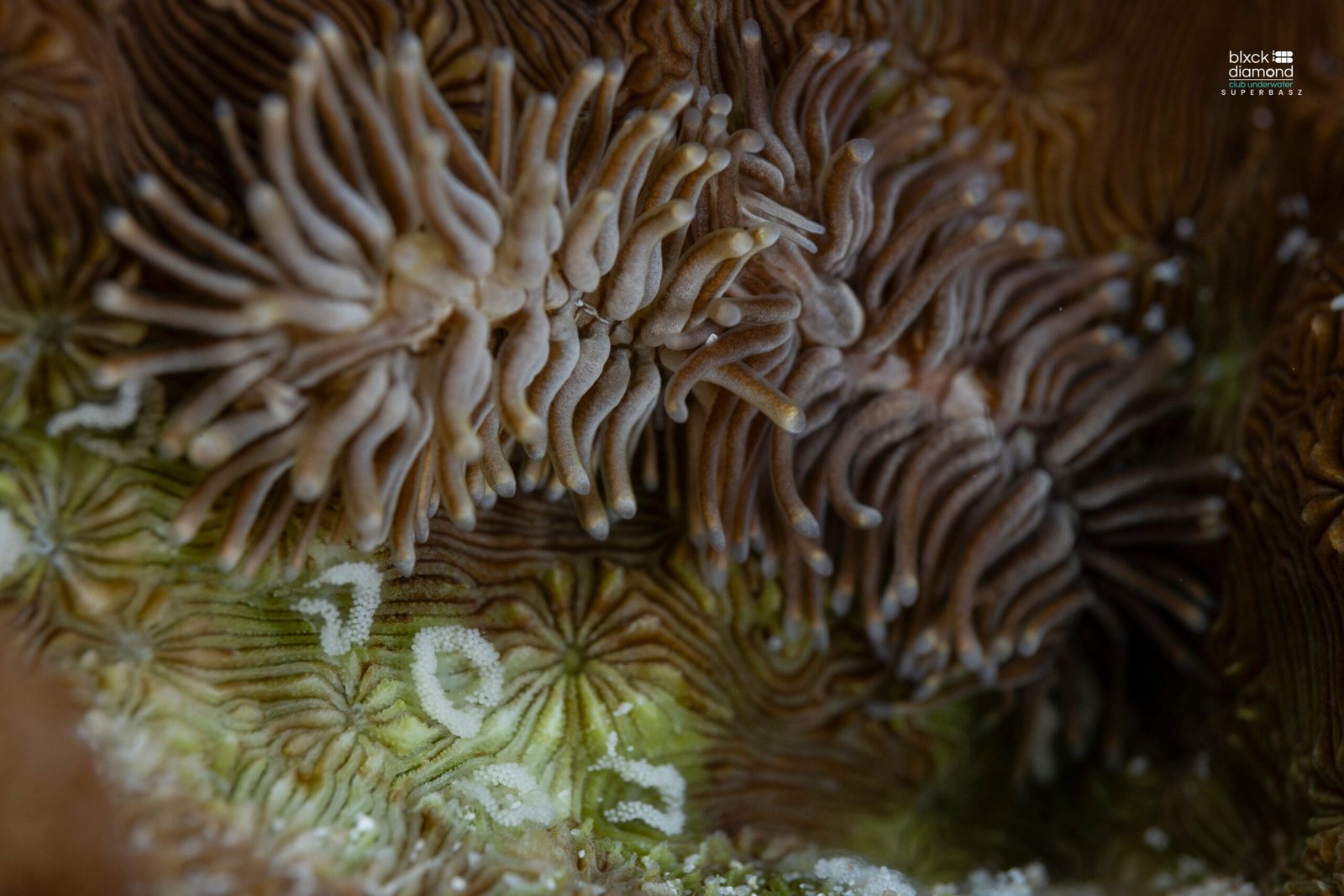
Phestilla viei (Mehrotra, Caballer & Chavanich, 2020) is one of the most cleverly hidden nudibranchs at our macro dive sites in Romblon, Philippines. Its body mimics the surface of its prey coral Pavona explanulata so perfectly that it is nearly invisible. However, there is a reliable way to find it. Look for a linear trail of crescent-shaped egg masses on freshly devoured Pavona coral. Follow the trail to its head — the animal is always there. It belongs to the order Nudibranchia, suborder Aeolidina, family Trinchesiidae. Find it on iNaturalist.
An Obligate Coral Predator
Phestilla viei feeds exclusively on Pavona explanulata coral. It never feeds on any other species — making it an obligate corallivore. Furthermore, it contains symbiotic dinoflagellates (Durusdinium sp.) which give it its brown coloration and may provide supplementary photosynthetic energy. Its cerata are held flat and horizontally, giving the body an extremely flat profile that matches the coral surface. In addition, characteristic bulbous bumps along its pericardium are a key diagnostic feature. It was described in 2020 from Koh Tao, Gulf of Thailand, and named in honour of Mr. Vie Panyarachun — a marine naturalist and citizen science contributor in Thai waters.
Photographing It at Sunset Cove
At Sunset Cove Beach & Dive Resort, our guides find Phestilla viei on Pavona explanulata colonies at 7 to 21 metres depth. Therefore, search any Pavona colony carefully for crescent-shaped egg mass trails. Follow the trail to its end — the animal sits there. For underwater macro photographers in Romblon, the combination of animal and egg mass trail makes a compelling documentary sequence. Consequently, this species rewards patient, methodical searching with one of the most interesting corallivore stories in our Marine Life Encyclopedia.
| Order | Nudibranchs (Nudibranchia) |
|---|---|
| Suborder | Aeolidina (Aeolid Nudibranchs) |
| Family | Trinchesiidae |
| Genus | Phestilla |
| WoRMS AphiaID | 1435754 |
| iNaturalist | 1080284 |
| Size | 5–20 mm |
|---|---|
| Colour Variations | Body translucent white to pale yellow. Sides pale brown. Cerata held horizontally giving a very flat appearance — mimicking the surface texture of Pavona explanulata coral. Characteristic bulbous bumps on the pericardium at regular intervals along the back — a key diagnostic feature. Brown pigmentation from symbiotic dinoflagellates (Durusdinium sp.) visible through translucent body. Colour and posture provide near-perfect camouflage on Pavona coral. |
| Identifying Features | Almost perfectly camouflaged on Pavona explanulata coral — looks like the coral surface. Cerata held horizontally and very flat. Characteristic bulbous pericardial bumps. Brown pigmentation from dinoflagellates. Most easily found at the leading end of a distinctive linear trail of crescent-shaped egg masses on freshly devoured Pavona coral. No cnidosacs at ceratal tips — a key character distinguishing Phestilla from other Trinchesiidae. Obligate corallivore — never found away from Pavona explanulata. |
| Substrate | coral |
|---|---|
| Depth Range | 7–21 m (most common: 12 m) |
| Temperature | 24–29°C |
| Primary Prey / Host | Pavona explanulata (Agariciidae coral) — obligate corallivore, feeds on no other species |
| Active Time | day, night |
|---|---|
| Seasonal Presence | Year-round — found exclusively on Pavona explanulata coral colonies |
| Egg Ribbon | Crescent-shaped egg masses in distinctive linear trails on freshly devoured Pavona coral — 80–120 eggs per mass |
| Spawning Season | Egg masses deposited in distinctive linear trails on devoured coral — present year-round |
| Chemical Defence | Absent |
| Aposematic Colouring | Absent |
| Camouflage Strategy | Body colour, flat horizontal cerata posture and texture mimic Pavona explanulata coral surface almost exactly. One of the most convincing coral-mimicking nudibranchs in the Indo-Pacific. The brown dinoflagellate pigmentation adds to the coral-like appearance. |
| Escape Response | Relies entirely on camouflage. Remains motionless on coral. No cnidosacs. No ceratal autotomy. Cryptic behaviour on coral surface is the primary defence. |
-
A new species of coral-feeding nudibranch (Mollusca: Gastropoda) from the Gulf of Thailand
Mehrotra, R.; Arnold, S.; Wang, A.; Chavanich, S.; Hoeksema, B.W. & Caballer, M. (2020). Marine Biodiversity 50: 36